Investing in rural land
Discover the Agrifrance report 2026 in French
18.06.2026

A market undergoing transformation
We are delighted to present our annual report on the French rural land market. More than a simple analysis of trends, this report reflects the realities we observe daily on the ground.
Rural land is undergoing a profound transformation, owing to a rare combination of geopolitical, economic and environmental pressures. Recurring crises are forcing all economic players to adapt at an accelerated pace. The surge in energy costs is disrupting established balances and acting as a powerful catalyst, while climate change is no longer the sole driver of the energy transition.
Yet France and Europe still boast strong structural advantages, including the diversity of their terroirs, the quality of their soils and their large consumer markets—key factors that must be considered.
Against this backdrop, rural land markets are showing signs of a slowdown, or price corrections seen in certain segments and regions. After decades of sustained growth, this deceleration is creating a window of opportunity for investors, or young people wishing to start an activity. This price balancing is improving project visibility, easing barriers to entry and allowing for returns that are more closely aligned with underlying economic fundamentals.
At a time of heightened uncertainty, French rural land continues to stand out as a tangible, resilient and non-relocatable asset. At the same time, rising geopolitical tensions are bringing issues such as food and energy sovereignty back into the fore. Far from being just a production asset, rural land is increasingly viewed as a strategic allocation—serving as a safe-haven asset, a diversification tool and a means of intergenerational transfer, largely uncorrelated with other markets.
In this rapidly evolving environment, expert guidance is essential to identify emerging trends and act accordingly, ensuring that this structural transformation becomes a source of long-term prosperity.

Head of Agrifrance – BNP Paribas Property SNC




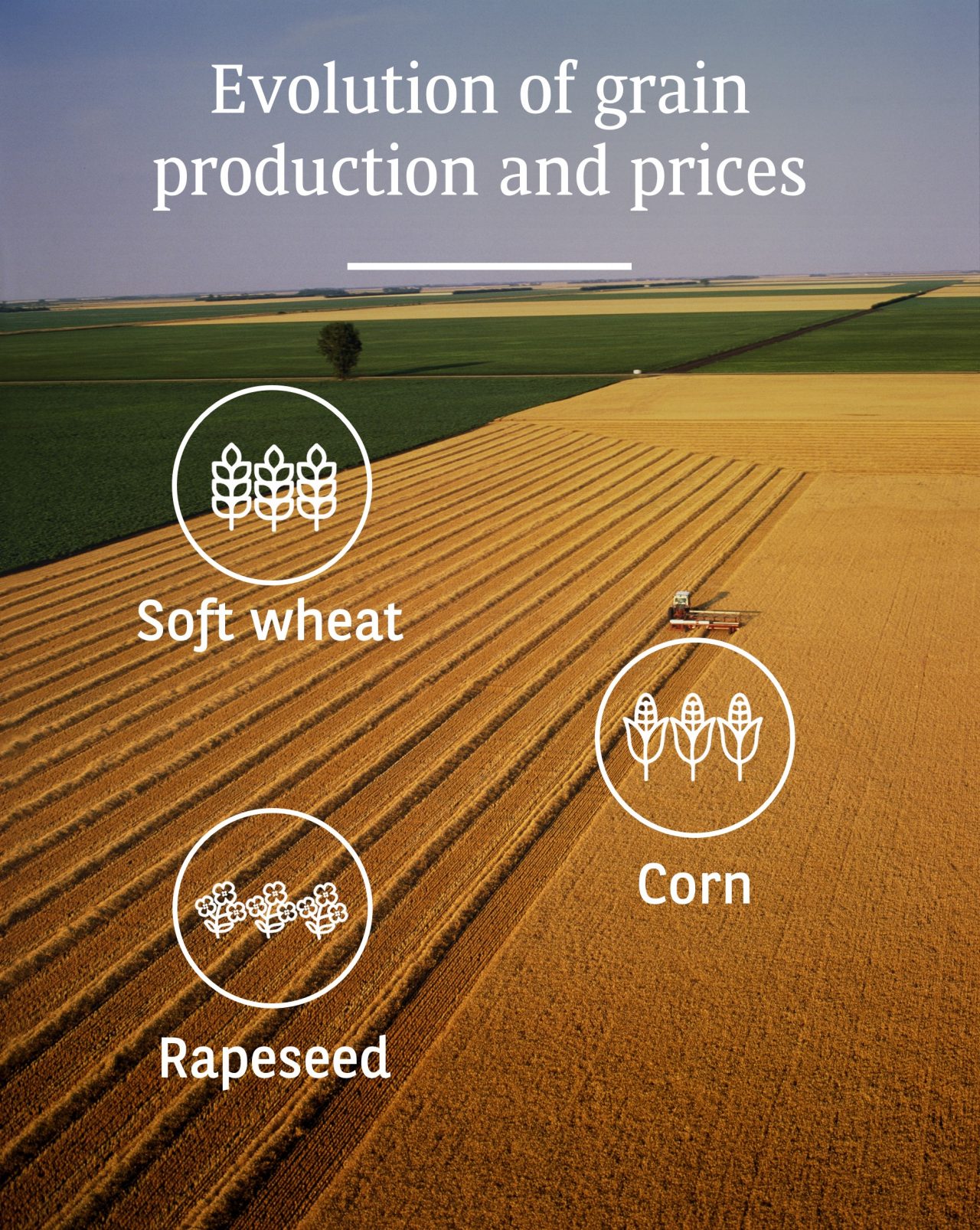
After hitting a low in the previous year, French cereal production staged a strong rebound in 2025, reaching 63.3 million tonnes—up 16.9% compared with 2024. This recovery is largely driven by a marked improvement in yields, which rose by 13.5%. Wheat, in particular, illustrates this rebound, with average yields increasing sharply to 74.2 quintals per hectare in 2025, compared with 60.9 the previous year—an almost 22% increase. However, in a context of abundant global harvests, cereal prices have moved lower, with soft wheat down 19% and corn declining by 8.6% year-on-year.
At the same time, oilseed production has also expanded, reaching 6.5 million tonnes, up 10.7% over one year, underpinned by a significant rise in yields—especially for rapeseed, which recorded a more than 25% increase (36.7 quintals per hectare in 2025 compared with 29.2 in 2024). Despite a much larger production, price trends remain mixed, with rapeseed prices falling by 16.4% year-on-year, while sunflower prices have moved higher.

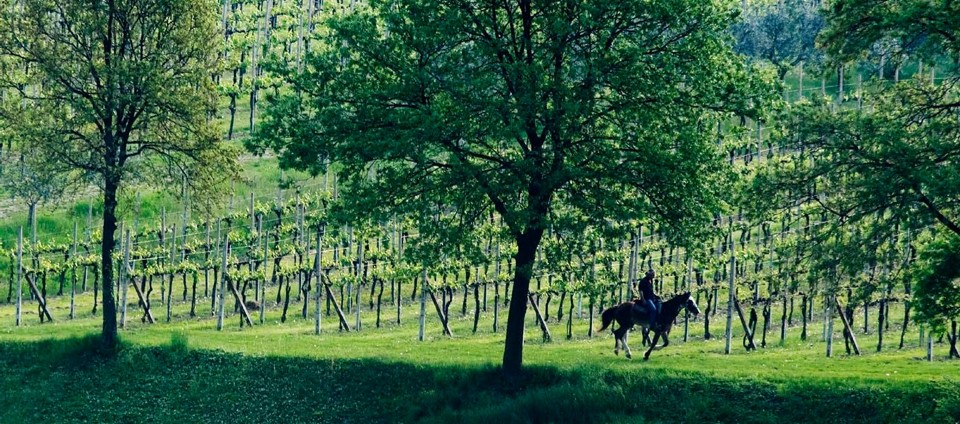
The European Union, which accounts for around 60% of global wine production, is expected to produce close to 140 million hectolitres in 2025. Despite a modest year-on-year increase of around 2%, this volume remains approximately 8% below their five-year average, highlighting the ongoing structural pressures facing the sector.
Italy, France and Spain continued to dominate the global wine industry in 2025. Italy retains its position as the world’s leading producer, with output estimated at around 47.3 million hectolitres—up roughly 7.3% compared with 2024, supported by favourable weather conditions across several regions, particularly in the south, including Sicily and Apulia. Spain ranks third among European producers, with output estimated at around 29.4 million hectolitres, down nearly 5% year-on-year. The country is enduring its third consecutive year of severe drought, resulting in one of the smallest harvests in decades and structurally lower yields.
France, for its part, is expected to produce around 36.2 million hectolitres in 2025, broadly stable compared with the previous year. However, production remains about 16% below its five-year average.

Despite an unstable international environment and persistent uncertainty, wood sales remained relatively resilient in 2025. Strong demand driven by sustainable construction and energy needs supported prices in the second half of the year, although traded volumes showed a declining trend. At the same time, ongoing trade tensions continue to disrupt international flows, with potential implications for timber trade. The US States remains one of the world’s largest consumers of roundwood, while China and Vietnam play a central role as key importers and processors.