

Addressing Market Concerns in 2H 2026
Investment Navigator Summer Edition (July-August)


Key questions include:
1. What are the key market concerns of 2H 2026?

2. What are the market implications of these concerns?

3. How should we position in second half of 2026 and beyond?

1. What are the key market concerns of 2H 2026?
Geopolitical worry – will the Hormuz situation improve?
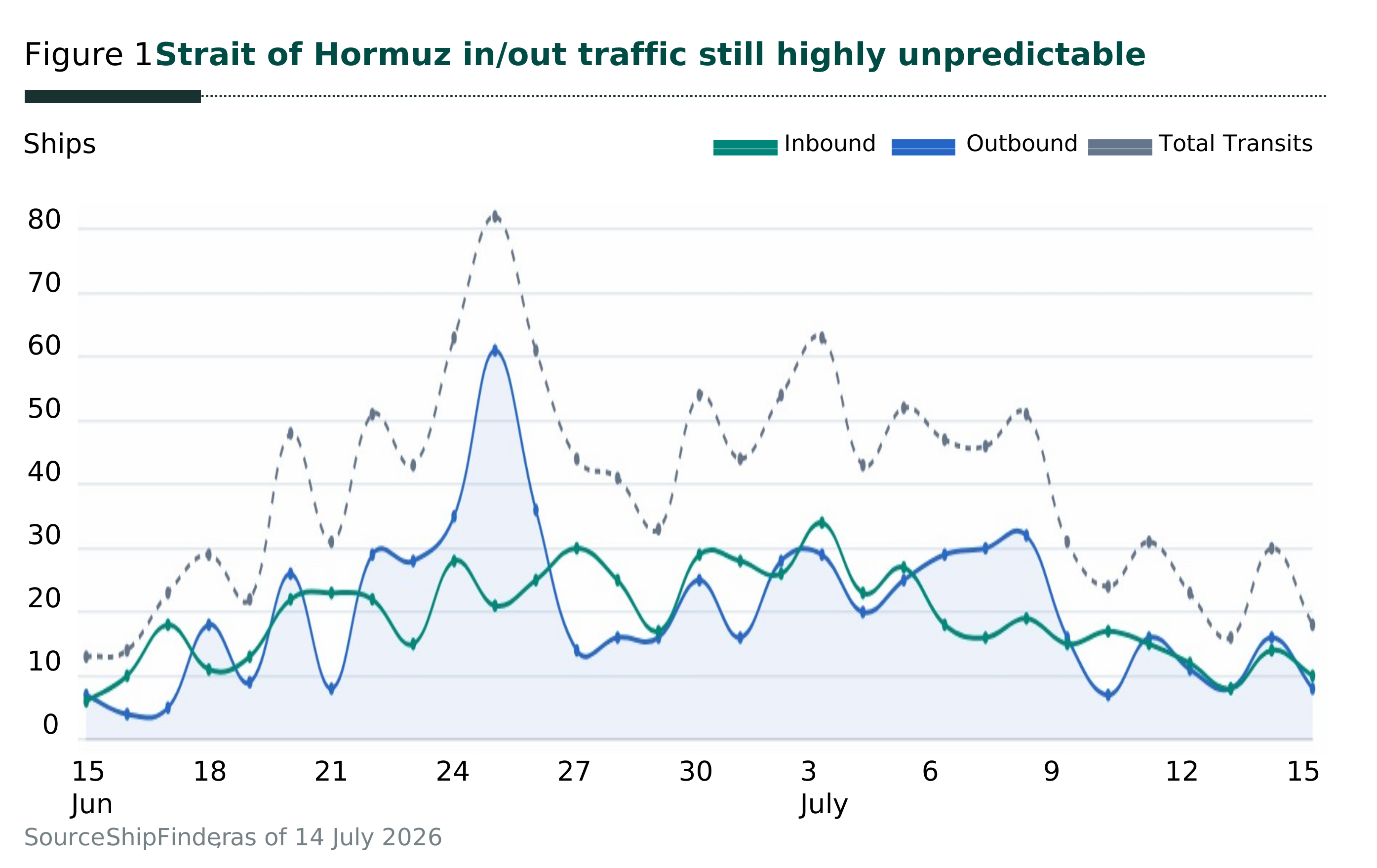
The US-Iran situation remains fluid as of July 2026. While the start of the conflict drove up oil prices and maritime insurance premiums, a mid-June interim peace agreement briefly raised hopes of a diplomatic breakthrough and pushed Brent oil prices back into the USD 70/barrel region as ships started to transit in and out of the Strait of Hormuz (see Figure 1).
Nonetheless, the ceasefire soon collapsed in July after Iran resumed strikes on commercial tankers transiting the US-supervised route. The US subsequently reinstated its naval blockade, cementing the Strait of Hormuz as an active, volatile military flashpoint with no immediate resolution in sight.
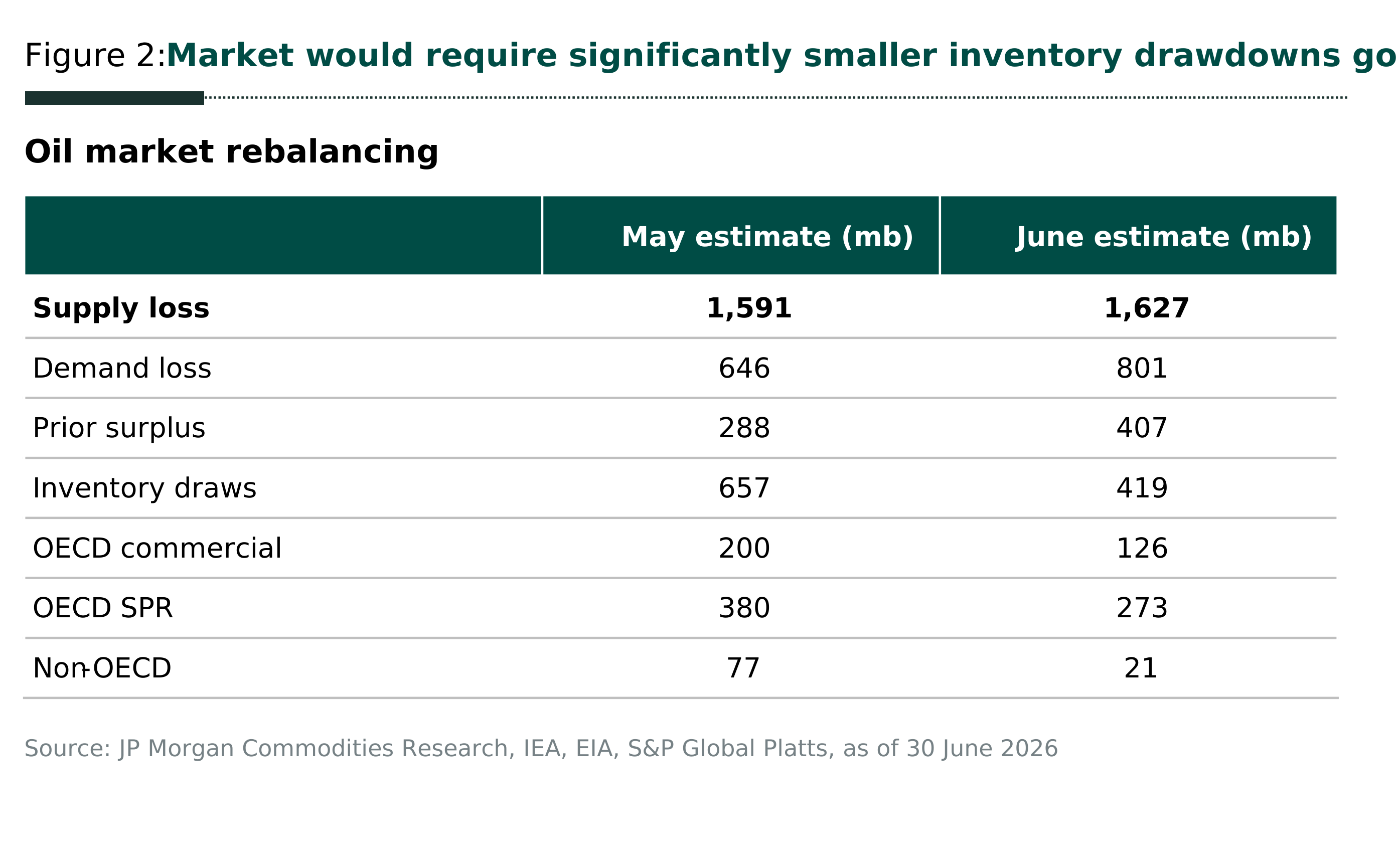
Crucially, the Strait remains the world’s most critical maritime chokepoint, handling roughly 20% of global oil and liquefied natural gas supplies. The first wave of inflation has already worked its way into the global economies. Despite this, the supply shortage has been quickly normalised by alternative oil sources, as well as energy replacements, relieving further oil inventory drawdown concerns (see Figure 2).
We maintain an Underweight stance on oil, with a 12-month target range of USD 60-70/barrel for Brent. Despite the near-term risk of further escalation, we expect the market to return to its oversupplied status and therefore revert to our pre-war price target. While the situation in the Middle East remains hard to predict, what is certain is that the worst seems to be behind us.
Central bank hawkishness worry – will interest rates rise?
Most economies are now preparing for "second-round" effects on inflation resulting from higher oil prices. Costs of everyday goods and services are increasing, as seen from the trajectory of Consumer Price Index (CPI) figures across the world. This is why central banks are forced into a slightly more hawkish stance to prevent wage-price spirals and unanchor inflation expectations.
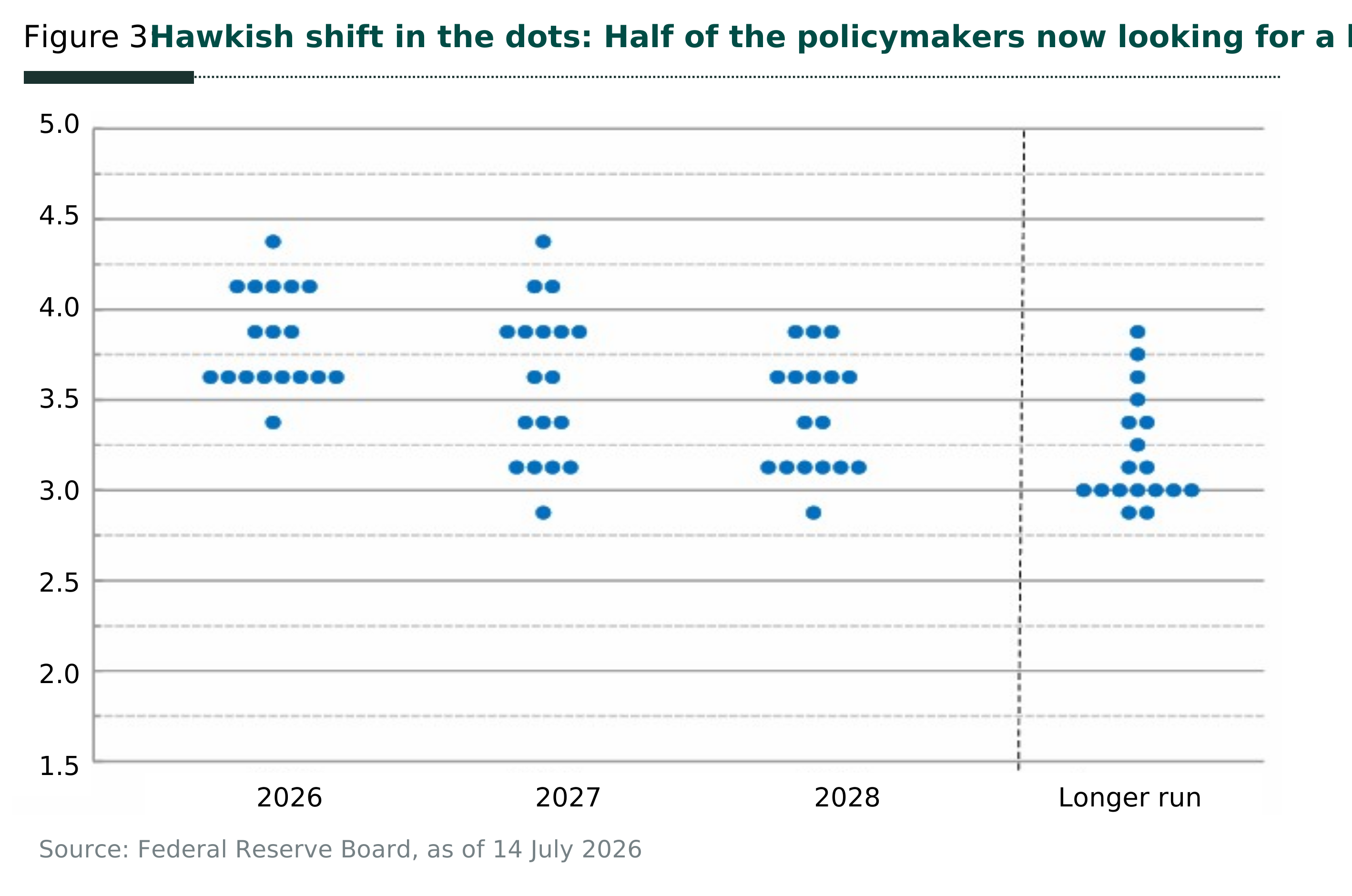
During his first Federal Open Market Committee (FOMC) meeting, newly appointed Fed Chair Kevin advocated a strict commitment to price stability, warning that letting inflation linger destroys long-term economic credibility. The more hawkish than expected Fed (see Figure 3) pushed the market to price in a rate hike as quickly as the upcoming September meeting, and two hikes (or 25bps) by the middle of 2027.
While reducing inflation may require high interest rates, doing so risks cooling the economy too aggressively, potentially triggering layoffs and high unemployment. Currently, the labour market is also softer than widely perceived. June non-farm payroll numbers attest to that.
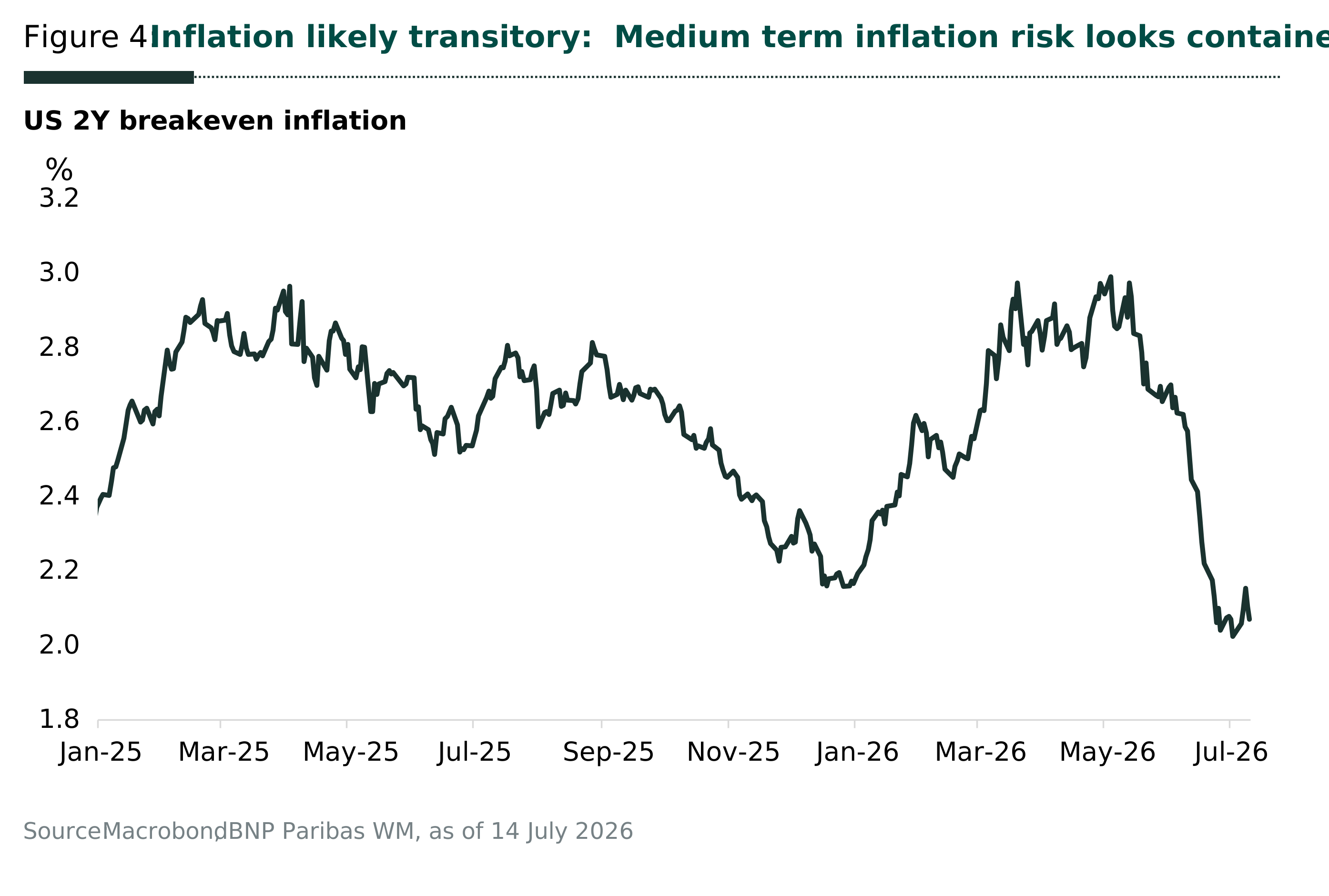
More importantly, with the base case that the worst is behind us for the Hormuz situation, we continue to see the current inflation as transitory (see Figure 4). Hence, while we think the current level of inflation warrants a hike (of 25bps) by December 2026, we do not see this as the start of a rate hike cycle, meaning no further hikes beyond this year.
2. What are the market implications of these concerns?
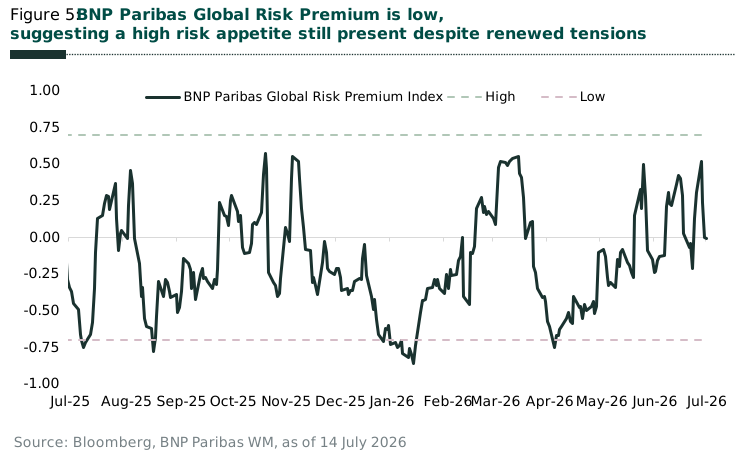
Clearly, the market is more focused on fundamentals rather than on geopolitical risk now. We have mentioned in the past that markets are typically forward-looking. Volatility across asset classes has not increased even as geopolitical tensions reignite. In fact, risk premium has decreased during this period (see Figure 5), suggesting higher risk appetite amongst investors. Such phenomenon is evident from the recent AI IPOs as well as the semis/AI build-out boom.
That being said, concentration risk is starting to look apparent. Two names alone account for approximately half of the Korea Composite Stock Price Index (KOSPI) index market weight. However, this suggests that a rotation within the asset class could happen soon. Wall Street is already giving a sneak peek, with the Dow Jones Index showing strength recently, while the technology-heavy Nasdaq has turned slightly more volatile.
Asset class rotation could also see money flow to the less-favoured precious metal space after a six-month long consolidation. Central banks globally continue to accumulate gold, while the higher inflation narrative has traditionally been positive for the yellow metal. Despite interest rate expectations picking up versus the start of the year, our base case of inflation being transitory (instead of runaway) means we could see an easing of dollar strength in the second half of 2026. These are fundamental reasons why we continue to favour gold as well as silver (being a beta play along with a supply/mining capex constrains) with a 12-month target price of USD 5,500/oz and USD 90/oz respectively.
3. How should we position in second half of 2026 and beyond?
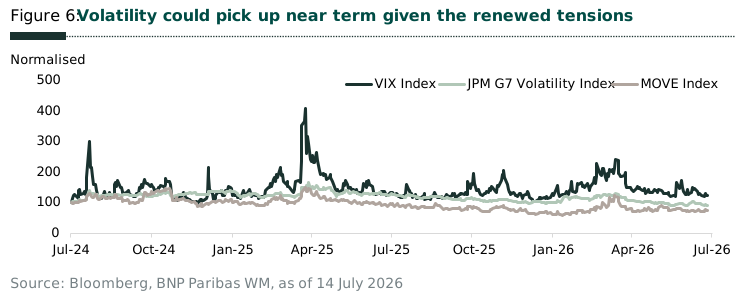
While volatility has generally remained low across equities, fixed income and forex (see Figure 6), there are sound rationales for it to pick up in the near term. Market continues to monitor the two main concerns stated earlier. A deteriorating situation in the Strait of Hormuz could reignite narratives of stagflation or even recession. Although it is not our base case, the unpredictable nature of the US administration suggests this should not be ruled out entirely. The AI build-out narrative also faces a severe reality check. Questions continue to be asked regarding the mismatch between massive capital expenditure (capex) and tangible revenue, circular financing, and more importantly, the stretched valuations. The upcoming mega AI IPOs (after SpaceX) also fuel more speculation of a massive AI bubble.
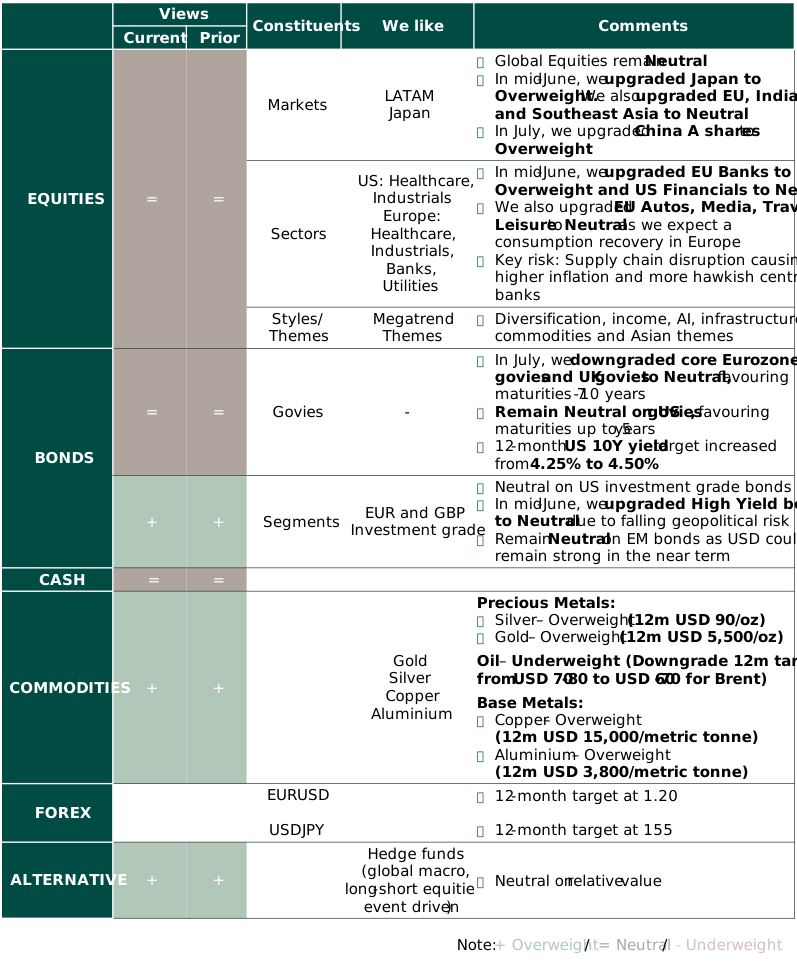
It is therefore vital for investors to remain well diversified to weather any potential volatility, whether short- or long-term. On equities, we continue to advocate for diversification away from US megacaps, with a preference for areas where we see more upside such as Japan and more recently China A-shares. We also have a value tilt (preferring healthcare and industrials), while also remaining neutral on Europe and Emerging Markets; however, we may revisit Asia again once the Hormuz outlook is more certain.
In terms of fixed income, we are neutral on government bonds generally and prefer EUR- and GBP-denominated investment-grade corporate bonds. On currencies, we now favour non-USD currencies over the next 12 months as we believe the de-dollarisation trade will regain momentum for the reasons mentioned earlier. Alternatives may also start to play a bigger role going forward. Real assets, such as precious metals and real estate/infrastructure, remain good hedges against inflation. We also stay overweight on industrial metals, particularly copper and aluminum, on the back of increased structural demand due to the build-out of energy infrastructure, renewables and data centre capacity in the coming years.
Crucially, investors should stick to a disciplined approach in this current environment. Leveraging on CIO strategic asset allocation (SAA) and a tactical asset allocation (TAA) can help investors reduce downside volatility while maintaining market participation. Such approach also reduces cognitive bias, such as market timing, while still allowing investors to retain financial flexibility to capture tactical, high-conviction opportunities elsewhere.
Overview of our CIO Asset Allocation for July 2026

Frequently asked questions
What could be the direction of the Fed now that we have a new Fed Chair Kevin Warsh?
The new Chair Kevin Warsh started this tenure with a more hawkish stance than previously anticipated. Price stability has been the key focus in his recent messaging, while many of the Fed policymakers are also shifting towards the possibility of higher rates given the surge in energy prices. He is also looking to revamp the central bank's approach to monetary policy through the launch of five task forces. One of which is on communication strategy, which has seen Warsh eliminate forward guidance and slashing rate projections from post-meeting statements.
What is the current development on the Straits of Hormuz?
As of July, the previously agreed upon ceasefire is no longer in place. Although the US-Iran Memorandum of Understanding (MoU) is not formally abandoned, it is surviving more on paper than in practice. Less than a month after the initial ceasefire was signed, renewed hostilities, tit-for-tat military strikes, and disputes over control of the Strait of Hormuz have effectively fractured that agreement. Commercial vessels in the Strait of Hormuz were targeted and hence the number of ships transiting in and out of the region has decreased dramatically after picking up significantly following the MoU. Nonetheless, the diplomatic track has not been completely severed and talks through intermediaries are still ongoing. These latest developments reinforces our base case that the reopening of the Strait is likely to be neither stable nor smooth. The situation remains fluid, but our stance is that the worst is probably behind us.
Please read carefully the disclaimer: https://bnpp.lk/-asia-disclaimer