

Navigating Higher Bond Yields
Investment Navigator Asia Edition October 2026


Key questions include:
1. What are the key drivers of higher yields?

2. What is the medium-term outlook for bond yields?

3. How could investors navigate this higher yields environment?


1. What are the key drivers of higher yields?
Global bonds continue to sell off, with US Treasury 10-year and 30-year yields hitting 24-year highs of 5.32% and 5.71% respectively. Additionally, French government bond spreads relative to Germany have also widened, nearly hitting levels that were last seen during the European sovereign debt crisis in 2012. UK 30-year gilt yields briefly rose beyond 6%; a level last recorded in the 1990s.
The primary driver of the year-to-date move in yields has been the repricing of central bank policy, as expectations shifted from cuts to hikes due to elevated energy prices and inflation concerns.
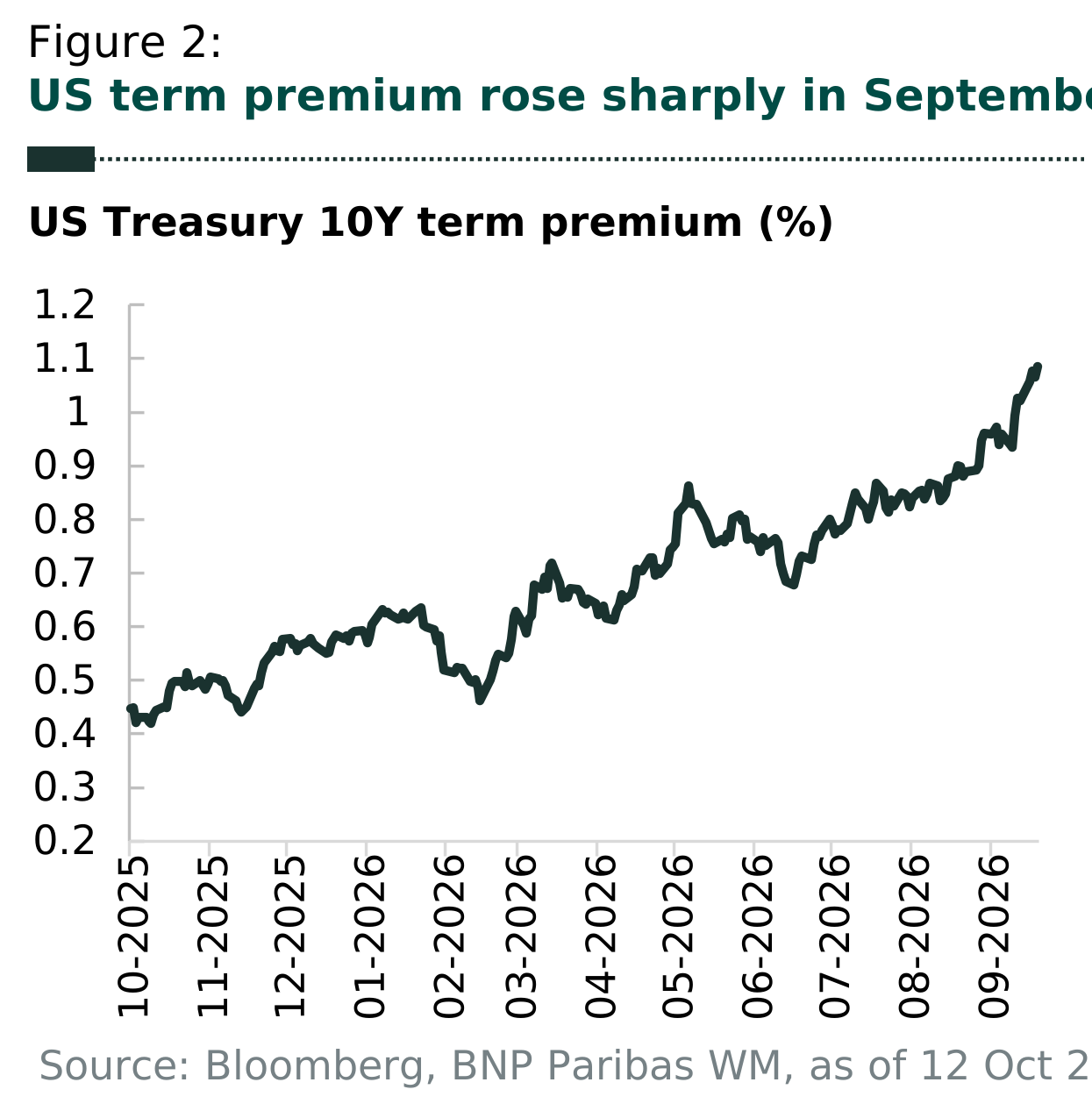
That said, rising real yields (nominal yield minus inflation rate) and higher term premium (extra return investors demand for holding long-term bonds) have played an increasingly important role in driving long-end yields higher since late August, following Fed Chair Warsh’s hawkish tone at Jackson Hole (Figures 1 and 2).
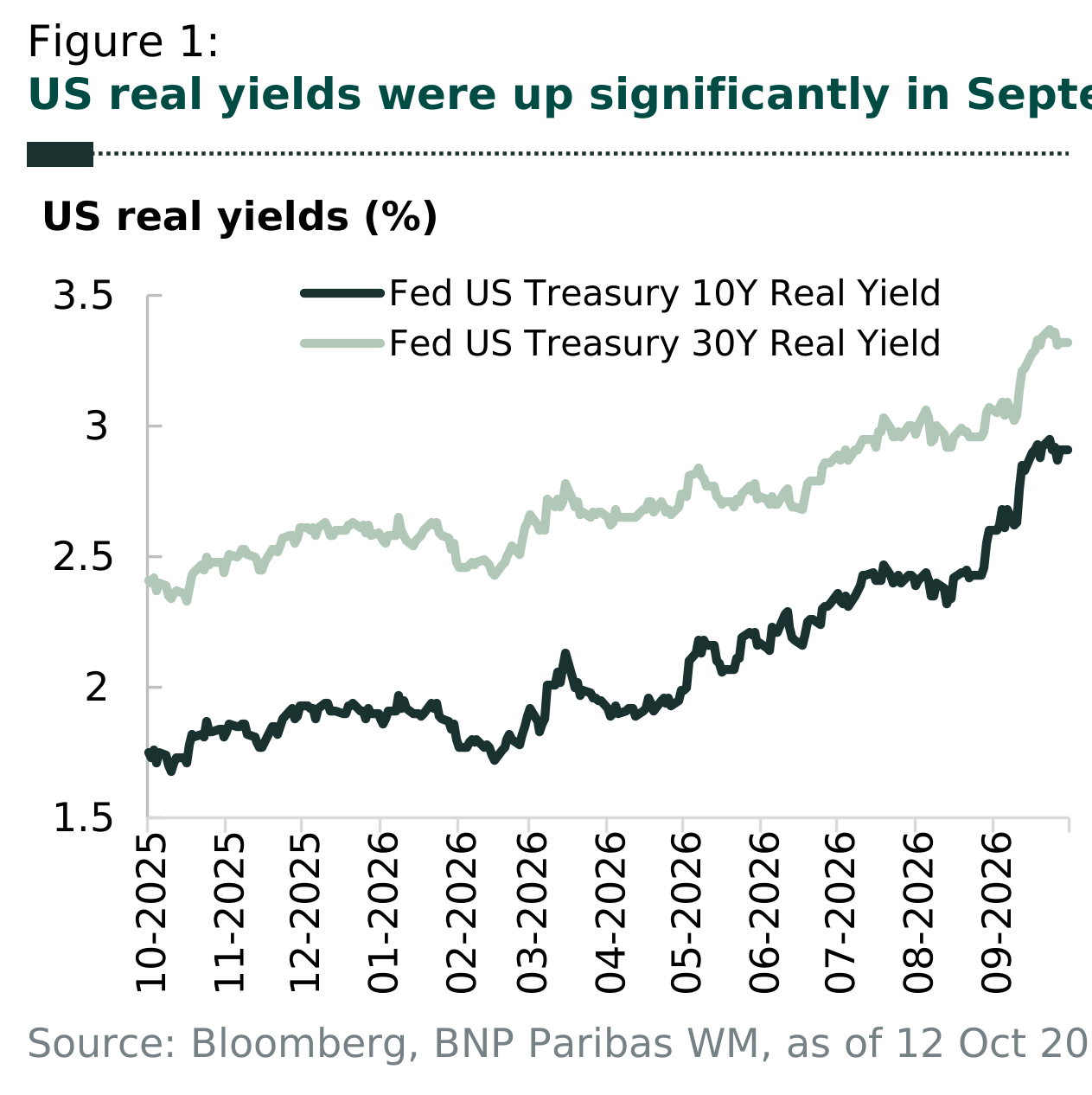
What are the key drivers behind the rise in real yields recently?
While medium-term and long-term inflation expectations have remained largely flat, solid economic growth and AI capex boom are major drivers of real yields. They have created significant additional demand for capital, particularly massive hyperscaler issuance to fund the AI-related infrastructure, leading to a repricing of the real cost of capital.
What are the key drivers of higher term premium since September?
The primary drivers are heightened fiscal concerns, particularly in France, the UK, and Japan, and persistent sovereign debt supply pressures. Additionally, changes in the Fed's communication style have fueled concerns over its credibility; specifically, under Fed Chair Warsh, the Fed has shifted toward less frequent public communication and limited forward guidance. While this is intended to prevent over-signaling, investors now demand a higher term premium to compensate for the reduced visibility into the Fed’s long-term policy path.
2. What is the medium-term outlook for bond yields?
We believe global yields are overshooting their fair value in the near term, and will normalise in the medium-term for the following reasons:
(1) Higher real yields slow growth
The US 10-year Treasury nominal yield and real yields have risen over 100bps and over 90bps year-to-date. It is estimated that a 100bp term premium shock could reduce GDP by 1.5-2.0 percentage points (pp) over 8 quarters.
(2) Inflation is supply-driven, not demand-driven
Higher energy prices and AI capex boom are supply-driven inflationary pressures. Our base case scenario assumes Brent oil will decline to USD 65 in 12 months, contingent upon a resolution in the US-Iran conflicts after the US mid-term elections.
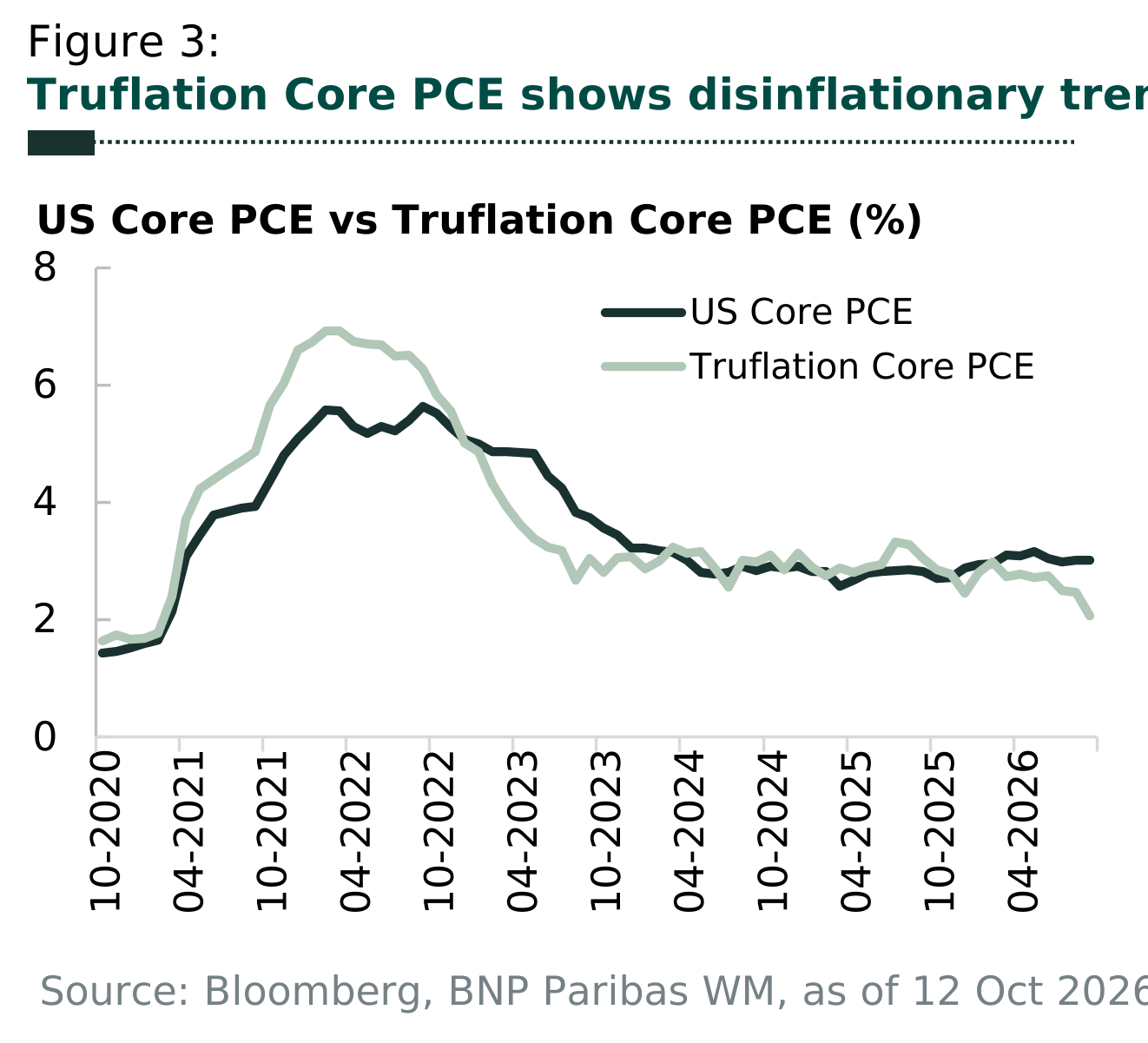
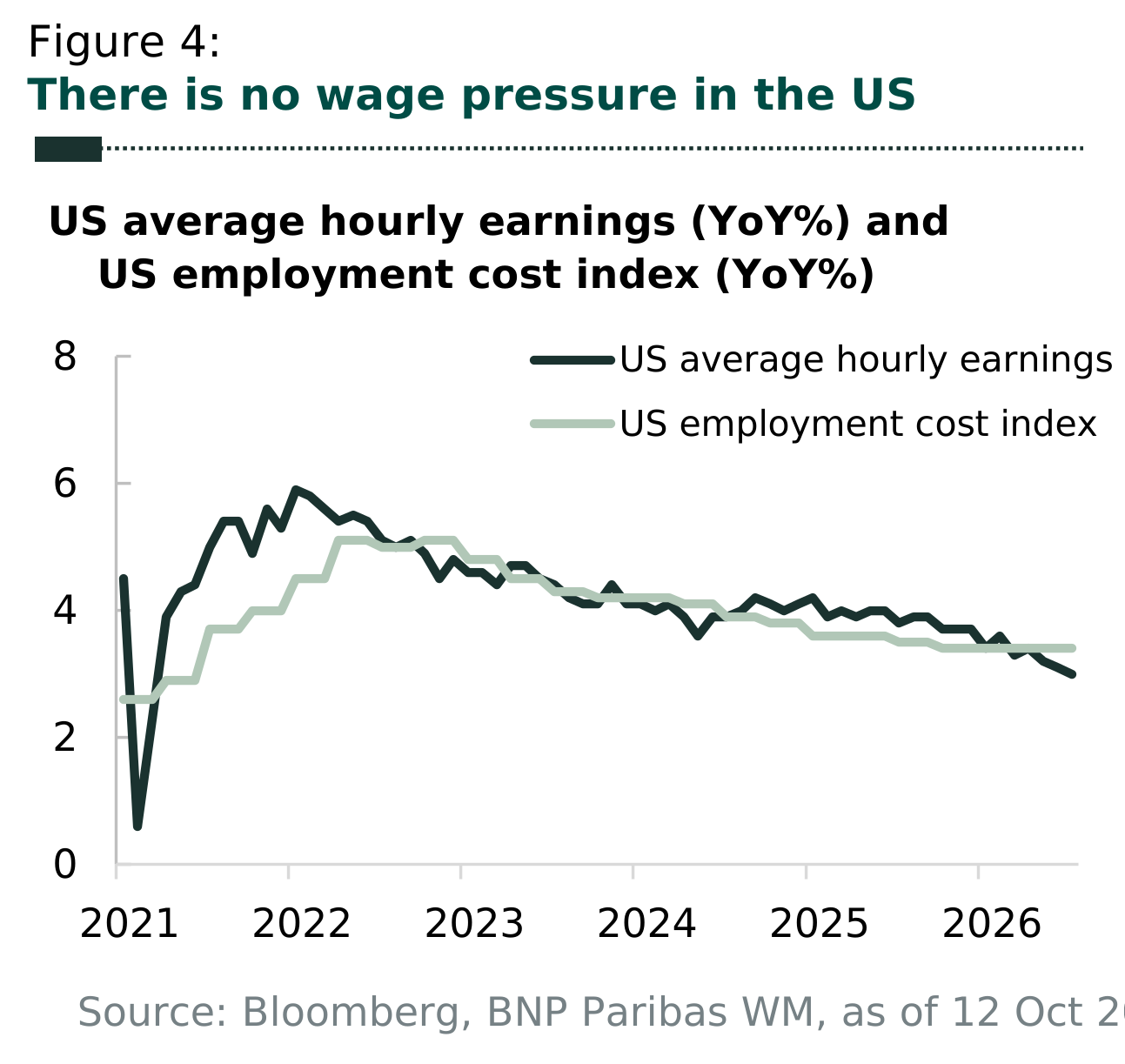
Slower capex growth and a higher base could also lead to decelerating inflation in AI hardware and semiconductors next year. Truflation Core PCE (real-time daily inflation indicator) shows a disinflationary trend (Figure 3). On the demand side, US wage growth is trending downward, and there is no sign of a wage-price spiral (Figure 4).
(3) Markets likely overprice central bank rate hikes
Markets have currently priced in three additional Fed hikes by the end of 2027, and two to three more ECB hikes by September 2027. We expect two more Fed hikes (one in December 2026 and one in January 2027) after which the cycle will be done, and only one more ECB hike in December 2026.
(4) “Bond vigilantes” are back
“Bond vigilantes” (bond investors who sell sovereign bonds to protest on fiscal unsustainability) put intense pressure on governments to pursue fiscal consolidation. If not, the governments would face skyrocketing debt-servicing costs.
(5) Higher yields start to attract demand for bonds
Inflows to US Treasury funds reached their highest levels since April 2025 over the past few weeks. The recent US Treasury 10-year and 30-year auctions also saw strong demand, especially from foreign investors.
3. How could investors navigate this higher yields environment?
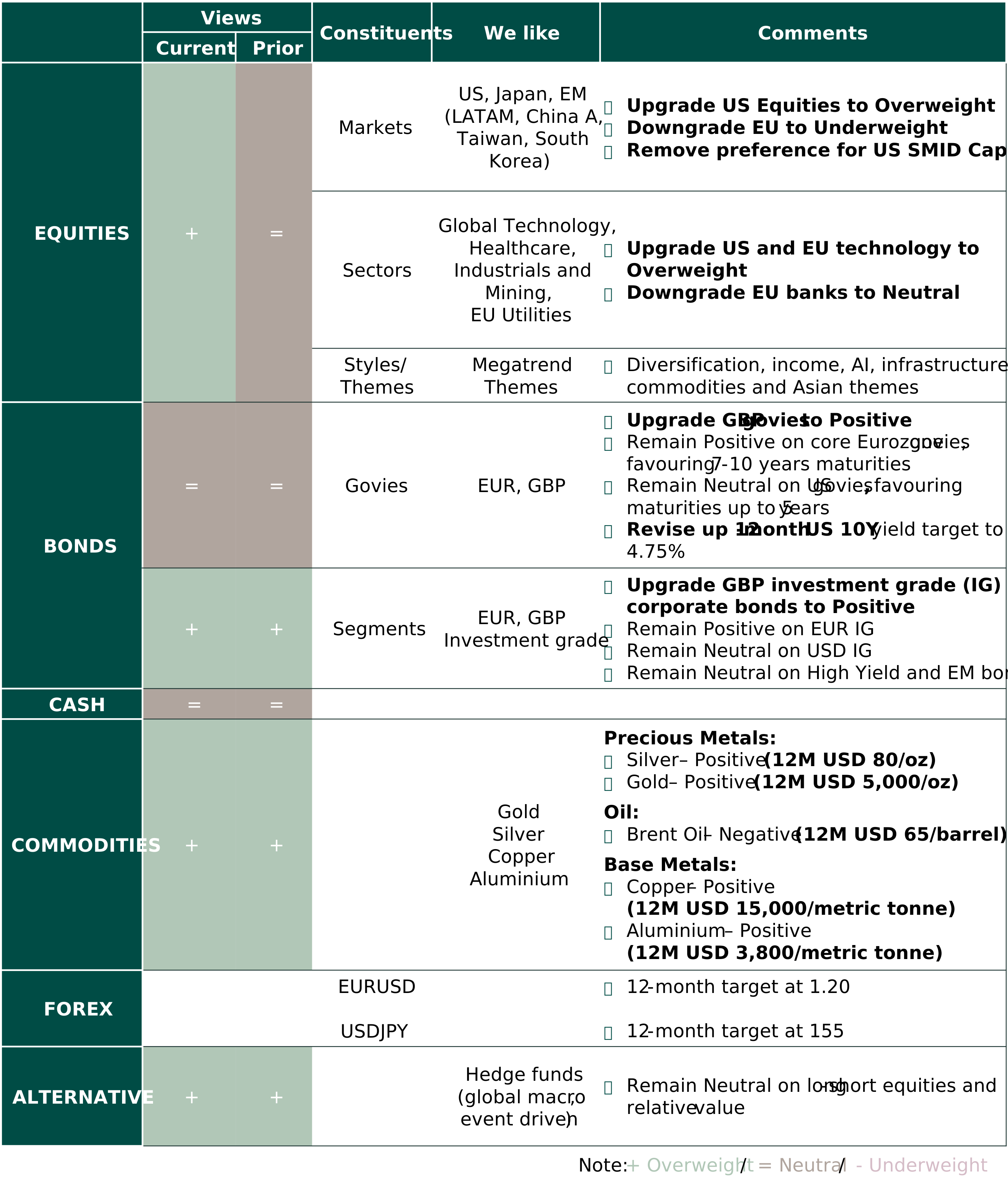
We are currently neutral on US Treasuries and we prefer short maturities. We have revised our 12-month target for the US Treasury 10-year yield upward to 4.75% from 4.5%. We believe a further market push towards 5.50% would offer a more favourable entry point.
In the Eurozone, the 10-year German government bond yield has also risen significantly. We have raised our 12-month target from 2.75% to 3%, though we see limited further upside from current levels. We remain Positive on core Eurozone government bonds.
We have upgraded UK government bonds to Positive and have raised our 12-month target from 4.4% to 4.65%. While current levels are above our long-term fair value estimates, we are increasingly confident that the government will take the necessary steps to stabilise debt dynamics.
Investors could navigate the “higher-for-longer” yield environment via:
Taking advantage of higher yields to gradually accumulate fixed income exposure and lock in higher yields, particularly focusing on high-quality bonds
For investors who worry about near-term market volatility could focus on income strategies through structured solutions (take advantage of high volatility) and dividend stocks
Diversification through hedge fund strategies
Overview of our CIO Asset Allocation for October 2026

Please read carefully the disclaimer: https://bnpp.lk/-asia-disclaimer