

Embracing the “Autumn Pain, Winter Gain” Seasonal Playbook
Investment Navigator Asia Edition September 2026


Key questions include:
1. Major factors that may contribute to the “autumn pain”

2. Major catalysts that may contribute to the “winter gain”

3. How could investors navigate the “autumn pain” and position for the potential “winter gain”?


1. Major factors that may contribute to the “autumn pain”
1.1. Higher global yields that tighten financial conditions
In the short term, higher global yields could tighten financial conditions, which may not bode well for risk assets.
US Treasury Secretary Bessent’s “Treasury Twist” announcement to double its long-dated bond buybacks maybe able to cap yields (for example, the US Treasury 10-year yield at ~5%), but it may not be able to lower yields significantly for the following fundamentals reasons:
1. Persistent inflation expectations due to prolonged geopolitical conflicts and a resilient economy, coupled with Fed Chair Warsh’s hawkish Jackson Hole speech, have raised rate-hike expectations.
2. Hyperscalers’ massive issuance is crowding out US Treasury and other investment grade bond supply.
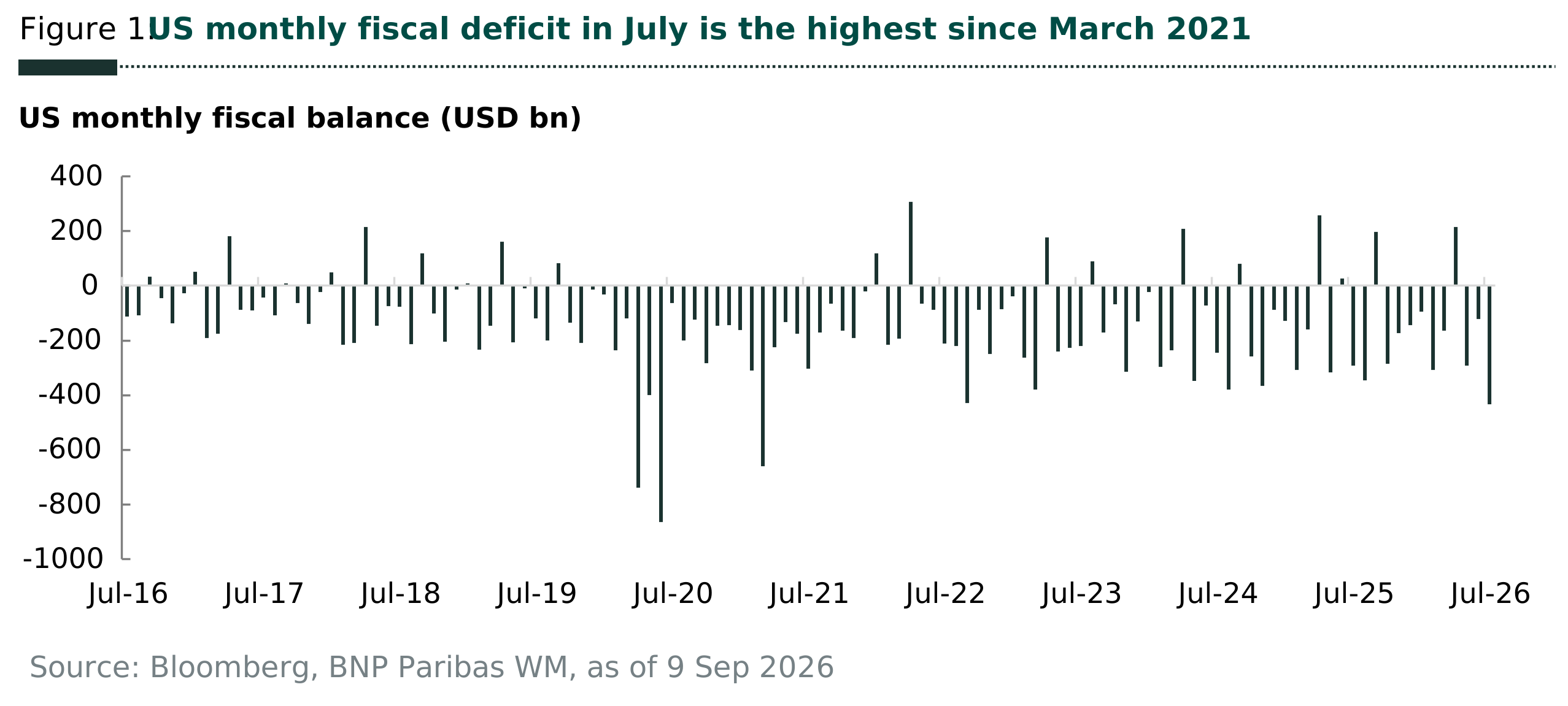
3. The US fiscal balance continues to deteriorate, with July recording the highest monthly fiscal deficit since March 2021 (see Figure 1), partly due to tariff refunds, lower tariff revenue and rising national defence spending.
4. Japan, the UK and France also face intense fiscal stress, with government bond yields hitting multi-decade highs.
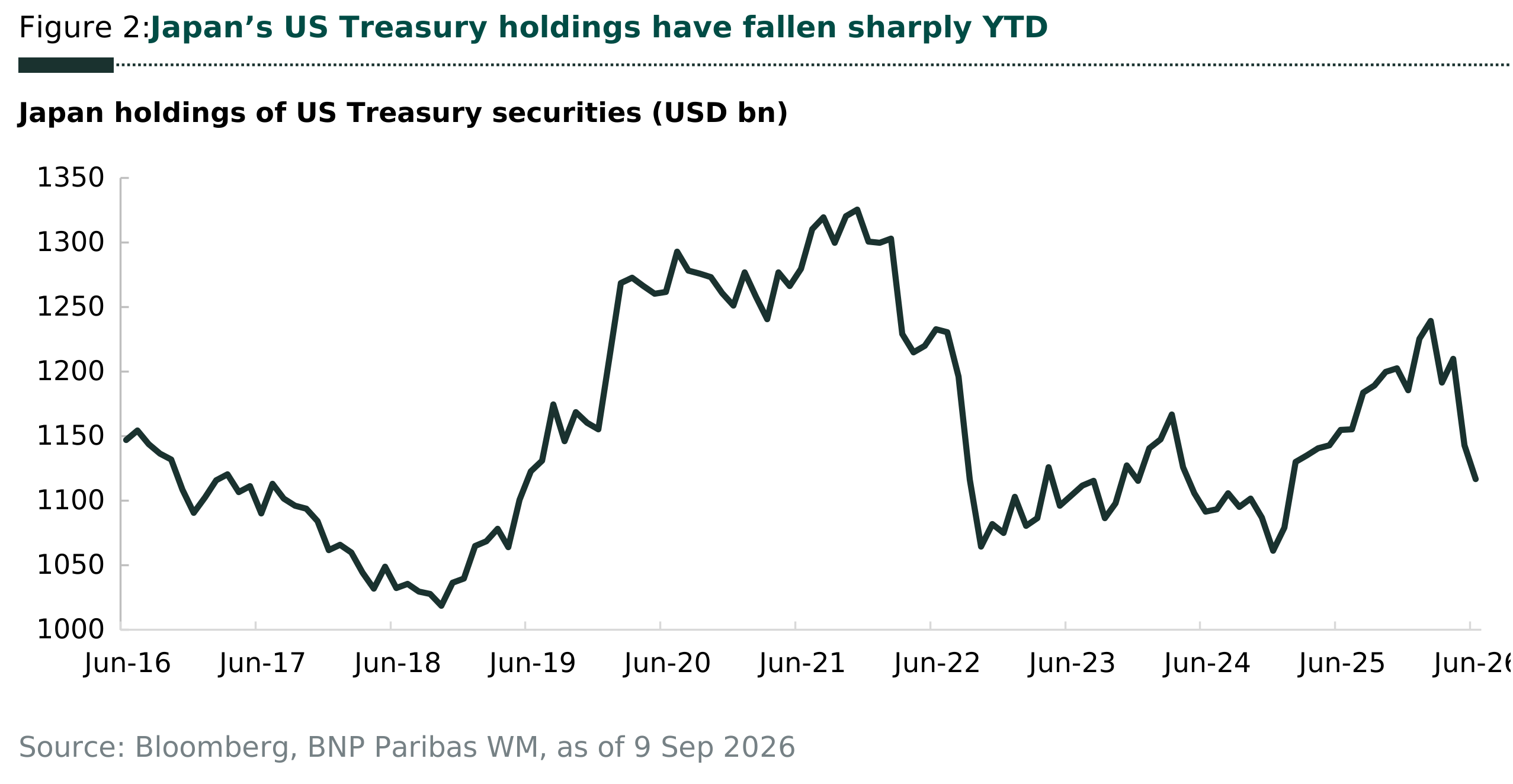
5. Japan likely sold US Treasuries to fund its intervention to support the Yen (see Figure 2). US Treasury’s recent joint intervention on the Yen and the bond buyback announcement may aim to reduce the Bank of Japan (BoJ)’s selling of US Treasuries. Bessent’s reluctance to see further foreign selling of US Treasuries is supported by his comment that the Fed should consider increasing the size of its Foreign and International Monetary Authority (FIMA) repo facility with Japan, enabling the BoJ to raise dollars without selling US Treasury holdings on the open market.
6. Norway’s USD 2.3 trillion sovereign fund has recently proposed reducing its weighting to government bonds from 70% to 50%, with US Treasuries the biggest holding, to improve investment returns. This could weigh on the sentiment.
1.2 Uncertainty around the upcoming US mid-term elections
Market tends to be more volatile in the run-up to the US mid-term elections. Recent polling results show a clear surge in momentum for the Democratic Party, driven by historic lows in President Trump’s approval ratings. It is now projected that there is a higher chance of Democrats taking control of the House of Representatives, while a 50-50 tie scenario remains possible in the Senate.
Normally, markets rally post elections as the outcome is known and uncertainty fades. However, the possibility of a Democratic clean sweep seems to be underestimated by markets, which could trigger short-term volatility if it happens.
1.3 Massive equity supply from a potential Anthropic IPO and SpaceX’s share unlock
Market estimates that a potential Anthropic IPO in October 2026 could raise USD 100 billion at a USD 2 trillion valuation. This would surpass SpaceX’s recent record (~USD 86 billion) and would make it the largest public stock debut in history. This mega-IPO may trigger heightened liquidity-driven market volatility, as retail and institutional investors may be forced to sell existing holdings to raise cash for the participation.
Any early index inclusion could also trigger forced buying and selling from the passive index-tracking funds. Furthermore, waves of unlocking of SpaceX’s insider-held shares post-IPO would significantly increase public share supply.
2. Major catalysts that may contribute to the “winter gain”

2.1. Post-elections that clear political uncertainty
Post-mid-term elections historically clear political and policy uncertainty, leading to a drop in risk premiums and a rebound in equity markets.
If the election outcome meets the consensus expectation of a split Congress, we may see a relief rally as markets tend to favour a divided government with potentially fewer sweeping legislative surprises, allowing investors to refocus on economic fundamentals and corporate earnings.
2.2. Strong earnings momentum and the AI boom remaining intact
The second quarter 2026 earnings season has been strong overall, with upward earnings revisions across the board, not only in AI-related sectors. Hyperscalers have continued to raise their capex guidance, supporting the AI “picks and shovels” ecosystem. It is also encouraging that some hyperscalers, such as Amazon and Microsoft, have seen cloud revenue growth outpace their capex growth.
The third quarter earnings season will provide further detail on AI monetisation and will be influential in shaping market expectations for capex into 2027 and beyond. At the same time, if the breadth of earnings revisions continues to improve, non-tech sectors would continue to catch up.
2.3. China ramps up policy support
We do not expect a “big bang” stimulus package from China, but the authorities are likely to roll out more targeted, incremental policy measures to support a slowing economy and achieve Beijing’s full-year GDP growth target of 4.5-5.0%. Recently, the Ministry of Finance unveiled a new RMB 360 billion (~USD 54 billion) capital injection into major state-owned banks and insurers.
As fiscal policy is the most effective lever to counter short-term downward pressure on growth, we expect fresh stimulus in the form of additional central government or local government bond quotas. We also expect some new policy-based financial instruments in the coming months.
3. How could investors navigate the “autumn pain” and position for the potential “winter gain”?
Investors could navigate the market volatility through:
1. A well-diversified portfolio across asset classes, countries/regions, sectors and currencies
2. Income focus strategies through structured solutions (take advantage of high volatility), dividend stocks, and quality investment grade bonds
3. Hedge fund strategies
4. Commodities such as gold, silver and copper
5. Private markets, such as infrastructure fund, and private equity funds on more defensive sectors such as healthcare
6. Japan, South Korea, Taiwan and China A-shares are our favored markets. Buy on dips to prepare for a year-end rally
Overview of our CIO Asset Allocation for September 2026


Frequently asked questions
Why could markets face an "autumn pain" period in the near term?
Several factors could create near-term volatility for risk assets. These include higher global bond yields tightening financial conditions, uncertainty surrounding the upcoming US mid-term elections, and large equity supply from a potential Anthropic IPO and SpaceX share unlocks. Higher yields can weigh on equity valuations, while election uncertainty and significant capital raising activities may increase market volatility and liquidity pressures.
What could drive the potential "winter gain" in markets after the volatility?
The removal of political uncertainty following the US mid-term elections could support a market rebound. Historically, markets tend to perform better once election outcomes are known and risk premiums decline. In addition, easing uncertainty and improving investor confidence could help risk assets recover after any seasonal weakness in September and October. Strong earnings momentum that shows the AI boom remains intact and China steps up policy support could also be potential catalysts for a winter rally.
Please read carefully the disclaimer: https://bnpp.lk/-asia-disclaimer