

14.05.2026
10 mins
#MARKET STRATEGY

Energy Security: How to profit?

Investment Navigator, May 2026 Edition

article-banner


In this edition, we explore

  •   how AI and electric grid modernisation are driving energy demand
  •   the risks of overreliance on fossil fuels
  •   the surge in renewables and nuclear energy; and
  •   who stands to benefit in this evolving energy crisis.


Energy security is dominating investor agendas, fueled by persistent geopolitical risks in Ukraine and Iran as well as the escalating energy requirements of AI technologies. As trade localises, countries are focused on securing energy security to navigate an increasingly uncertain future. Key trends include:

📈Record Investment in Energy: Global energy investment hit an all-time high of approximately US$3.3 trillion (tn) in 2025, with US$2.2 tn flowing into clean energy technologies (renewables, grids, storage, nuclear, electrification), versus US$1.1 tn into fossil fuels.

💡Solar and Battery Storage: Global solar investment leads with roughly US$450 billion (bn) annually, while battery storage investments exceeds US$65 bn.

📊Grid Investment Gap: Electricity grid investment stands at about US$400 billion per year, but the International Energy Agency (IEA) warns this is insufficient to maintain long-term electricity security as demand accelerates.

🚩China’s Dominance: China now accounts for nearly one-third of global clean energy investment, spending almost as much as the US and EU combined.

🔑Renewable Resilience: Renewable energy capacity reached nearly 50% of global installed electricity capacity in 2025, improving resilience against oil and gas price shocks.

🗲 The driver of energy consumption

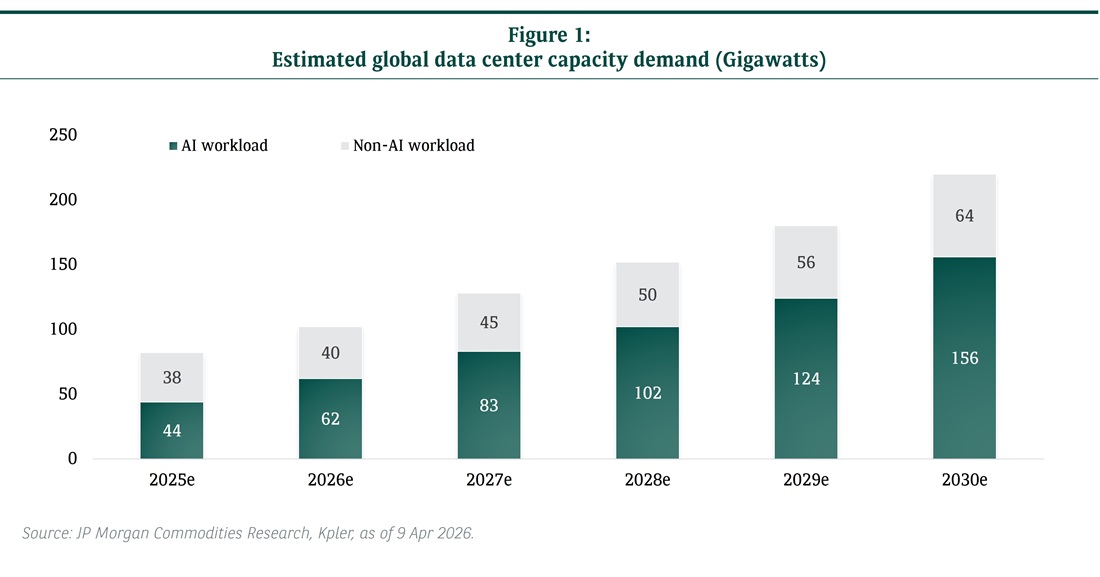
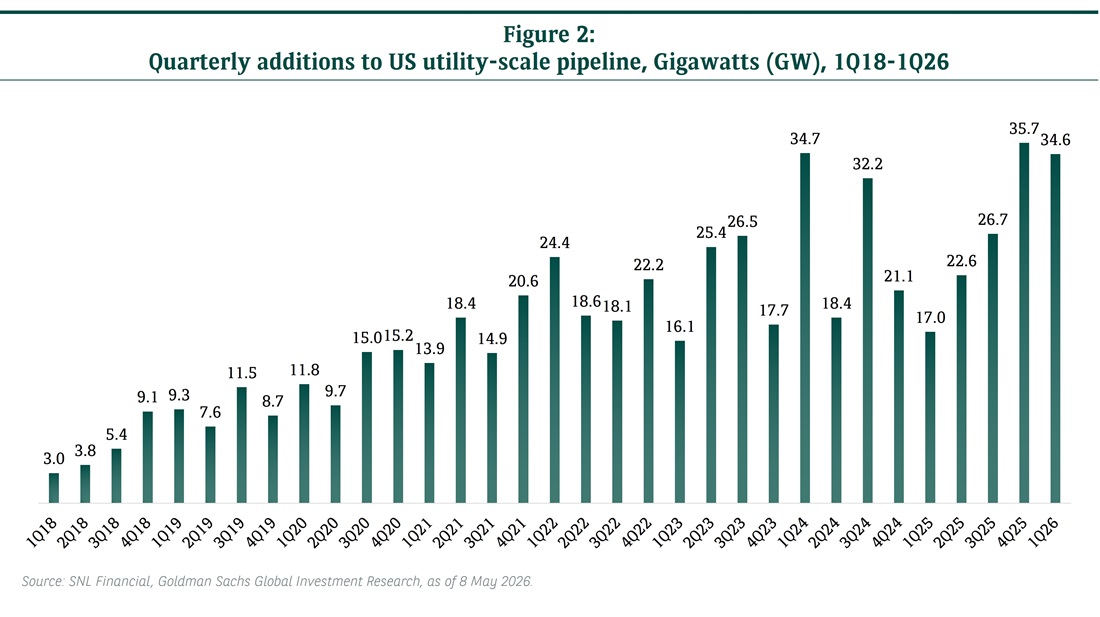
AI will drive a large-scale investment in power generation, but the electric grid is an often-overlooked key enabler. Grid modernisation, transmission, transformers, and energy storage are key strategic bottlenecks. Authorities can boost investment through attractive regulated returns, policy support, and growing power demand. Global data center electricity consumption is projected to more than double in the next four years. An electrical grid investment of US$400 billion per year remains insufficient for energy security. Companies involved in electricity generation, power infrastructure, and electrical-grid-related activities stand to benefit. 


🏭The overreliance on fossil fuels

While the Iran War has reminded the world of energy security and its over-reliance on fossil fuels, they remain a key part of the energy equation. Oil demand is still rising globally, driven by rising incomes and population growth. Oil demand could rise modestly to 113 million barrels per day (mb/d) by 2050, up from 100 mb/d today. Furthermore, countries are poised to increase their ability to produce and store their own oil supply in the wake of the recent Ukraine and Iran wars, seeking greater energy security. This means countries such as the US, Brazil, and the Middle East are poised to benefit in the medium term.

The US produces more oil than Russia and Saudi Arabia combined. They are currently shipping 8.2 mb/d of refined products and a record 6.4 million barrels of crude oil for export, following the closure of the Strait of Hormuz. Oil producers, explorers, and oil service companies are poised to benefit from increased capital expenditures (capex) in the coming years. This follows a period of lower capex and capital returns in prior years.

Natural gas will serve as a key transition fuel and will benefit from AI-driven demand. Again, the US is a leader in the space, providing opportunities in LNG, regasification, and exploration. In addition, oil storage will need to be refilled, leading to a higher oil price in the medium term.


📈The growing demand of renewables

The closing of the Strait of Hormuz has put in stark view the over-reliance on a narrow chokepoint for fossil fuels, boosting demand for diversification of energy generation sources. Energy transition is arguably more urgent and likely to remain a priority for many major economies from this onward. Unlike fossil fuels, wind, hydro and solar energy incur no "fuel cost" that can be influenced by geopolitical developments. 

Amongst the renewables, solar is one of the fastest-growing power sources due to its record-low costs and rapid deployment, as infrastructure can come on-line in 1-2 years, compared to longer timelines for nuclear and other power sources. In 2025, installations of 600-700 GW are expected, with China leading but with strong contributions from Europe, the US, and India. Annual additions could reach 700-900 GW by the end of the decade. Solar remains the key renewable sub-sector and is likely to represent 80% of renewable capacity additions through 2030. Cumulative global solar capacity stands at 2TW and is on track for over 4TW in new wind and solar in the next five years. China leads as the low-cost producer in this space, presenting significant investment opportunities, with solar emerging as a key beneficiary. 


🔋The resurgence of nuclear energy

Nuclear energy remains the second-largest source of low-carbon electricity globally, trailing only hydropower. Crucially, the global reactor fleet operates at a capacity factor of approximately 83%, meaning nuclear plants run at full power more consistently than any other energy source (such as wind or solar, which are weather-dependent). In short, nuclear energy provides a stable baseload power supply at a time when grids remain underdeveloped.

As of early 2026, nuclear energy accounts for approximately 9% of the world's total electricity generation. While electricity generation is the most common way to measure nuclear energy's contribution, its share of broader total primary energy consumption (which includes fuels for transport, heating, and industry) is lower, at roughly 4% to 5%. As for data centres, nuclear energy accounts for about 15% of the electricity mix currently and is slated to increase in the coming years.

As of today, more than 30 countries have pledged to increase nuclear capacity by more than 300% by 2050. While nuclear reactors have long lead times for construction and approvals, new innovations in small modular reactors (SMRs) could help debottleneck some of the traditional development timelines. Uranium also appears undervalued given long-term demand in this sector.

⚡Beneficiaries of this energy crisis

Naturally, the Middle East conflict has galvanised demand for the energy transition and infrastructure. In April 2026, industrial metals recovered from their March correction, as fears of an economic slowdown were more than offset by the expected acceleration in the energy transition (due to high fossil fuel prices and the strategic importance of energy independence), as well as some supply disruptions.

We remain positive on industrial metals over the next few years, with the view that demand is likely to outpace the limited supply growth for base metals. We remain most positive on copper, aluminum and uranium (driven by strong demand growth from nuclear energy and data centres).

From an equity perspective, the energy and mining sectors are likely to benefit in the aftermath of the US-Iran war. Global economies should continue to diversify their energy sources, with many even restarting coal plants or expanding domestic oil drilling to fill energy shortfalls and support diversification. Countries that are dominant in the mining space, such as Australia and China, are the main beneficiaries. These currencies could see rising demand given the ongoing commodity boom cycle. 

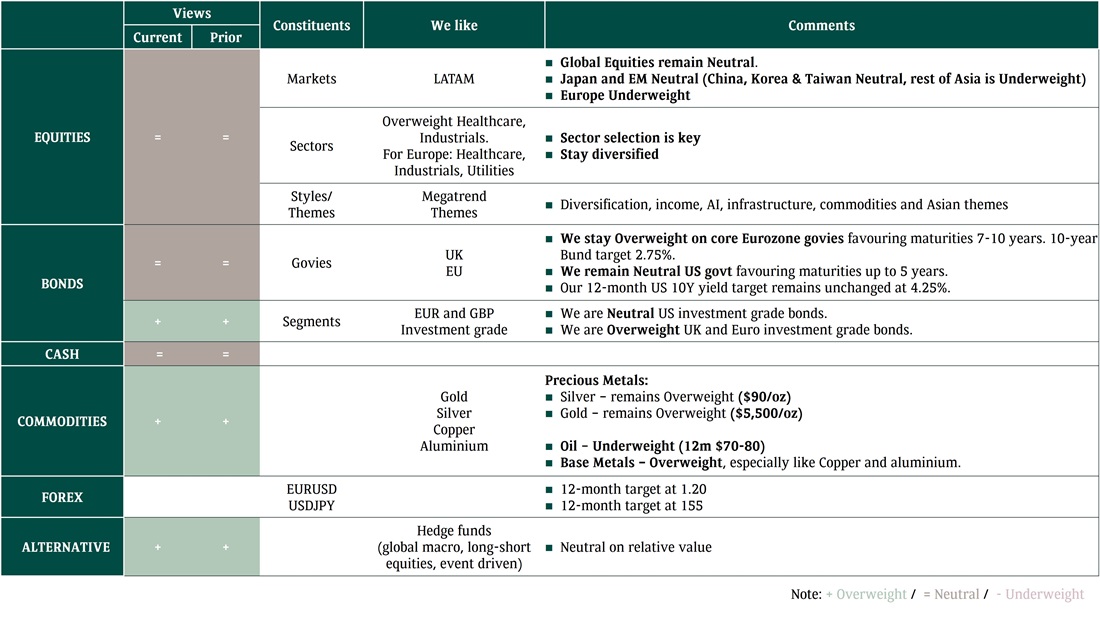
Overview of our CIO Asset Allocation for May 2026


Please read carefully the disclaimer: https://bnpp.lk/-asia-disclaimer