06.02.2026
#WEALTH FOCUS

The $200 Billion Water Revolution: Where Scarcity Meets Opportunity

From crumbling infrastructure to AI’s hidden thirst, the global water crisis is reshaping economies and creating a new frontier for strategic investments.

article-banner

The Crisis Beneath the Surface 

Today, water scarcity is no longer a distant threat – It’s a $200 billion opportunity. Water scarcity has evolved from a distant concern into a pressing global emergency. While water covers 75% of the Earth’s surface, only 1-2% is usable, and demand is surging 25% faster than population growth.

Meanwhile, one-third of piped water globally is lost to leaks, aquifers are collapsing, and AI data centers are consuming millions of liters monthly.

Yet within this crisis lies one of the most compelling investment opportunities of the decade.

In this article we focus on discussing some of the innovative solutions – spanning infrastructure, management, treatment, and technology, which in our view hold the key to mitigating this challenge.

The 3 Pillars of the Growing Water Emergency:

1.      Crumbling water infrastructure

The OECD estimates $1 trillion is needed globally by 2030 to meet water infrastructure gaps, with $200B/year as a rough annualized benchmark[1].

-          Leakage: One-third of piped water globally is lost to leaks before reaching consumers[2].

-          Scale: The US water pipe network spans 2.2 million miles – enough to circle the Earth 80 times – with a main bursting every 2 minutes.[3]

-          Contamination: 80% of sewage globally remains untreated, while microplastics pollute 83% of tap water.[4]

2.      Unsustainable Demand Growth

-          Demand Surge: Water usage has risen 40% in 40 years and is projected to increase another 25% by 2050 – 1.7 times faster than population growth.[5]

-          Aquifer Collapse: Over 50% of aquifers – natural underground water reservoirs – have passed their tipping points.[6]

3.      Data Centers: A Thirsty New Challenge

-          AI’s Water Footprint: ChatGPT consumes ~4.5 million liters monthly – enough for 2 glasses of water for every person on Earth. By 2027, AI models could require 6.6 billion m³ annually, exceeding half the UK’s total yearly water usage.[7]

The challenges outlined above underscore the urgent need for action. However, they also highlight a growing opportunity: the chance to rethink how we manage, treat, and distribute water. From cutting-edge technology to large-scale infrastructure projects, innovative solutions are already emerging – and they are reshaping the future of water sustainability.

These advancements not only mitigate water scarcity but also present significant opportunities for investors and stakeholders.

We identify 4 main areas of advancement:

1.    Water Infrastructure
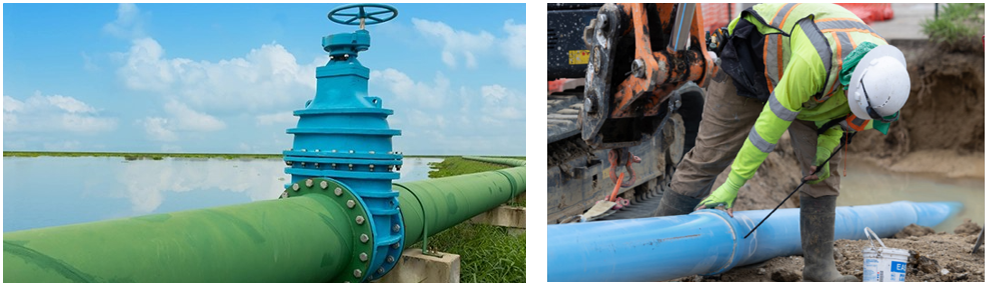
Source: Illustration from American Water Works Association / www.awwa.org

Massive infrastructure investment: The US plans to spend a total of $50 billion over the next decade replacing aging iron/steel pipes with PVC/HDPE, while municipal utilities are slated to allocate $104 billion by 2030 for broader upgrades of pipes, pumps and valves. Significant budget to water infrastructure was allocated under the Bipartisan Infrastructure Law / Investing in America Agenda (Biden Administration).

While in Europe, the European Investment Bank (EIB) pledged EUR15 billion for water pollution reduction, water saving and innovations in the water sector across the EU over several years. National and regional water programs are also regularly backed by InvestEU, and EIB green loans.

Case study: American Water Works’ commitment – The US largest privately‑owned water‑service firm is embarking on a $40 billion program to replace old pipelines, modernize distribution networks and boost the resilience of pumps, valves and other critical assets, over the decade.

2.    Water Management

Water management

Source: Illustration from Xylem / www.xylem.com

Digital transformation of water management: Internet of Things (IoT), Artificial Intelligence (AI), and smart meters now enable real time monitoring, leak detection, and optimal allocation of water resources. The digital water solutions market is projected to grow 8.8% per year, reaching $55.2 billion by 2030.

Case study: Xylem’s strategic move – The leading global water‑technology firm, bought a majority stake in Idrica for $637 million, adding advanced analytics and network‑optimization capabilities to its portfolio and strengthening its offering for smarter leak detection and infrastructure efficiency.

3.    Water Treatment

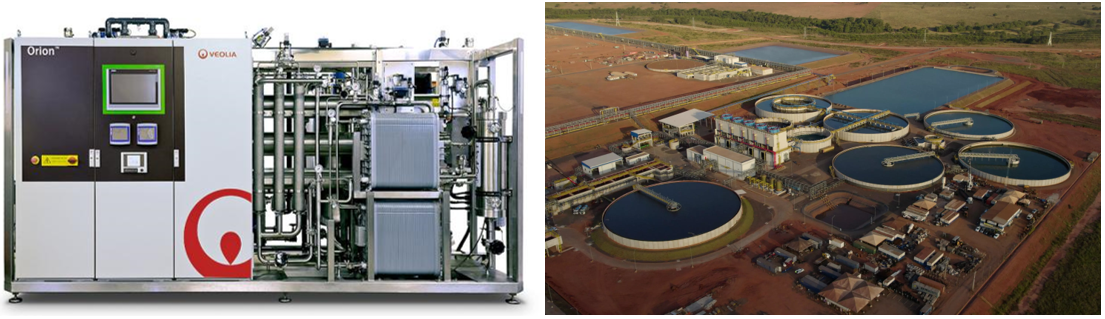
Source: Illustration from Veolia / www.veoliawatertechnologies.co.uk, www.veoliawatertech.com

Advanced water‑treatment technologies are driving rapid market growth: Chemical, physical and biological processes are progressively tackling contamination, propelling the global water‑treatment market from $23.1 bn in 2022 to an expected $31.8 bn by 2028, roughly 14.8% annual growth.

Case study: Veolia’s strategic expansion – The world’s leading environmental‑services firm recently acquired the remaining 30% of its subsidiary Water Technologies and Solutions, specialised in advanced water treatment solutions, for approximately $1.75 billion, boosting its growth in high value-added water technologies, especially for strategic industries (microelectronics, pharmaceuticals, data centres).

4.    Desalination

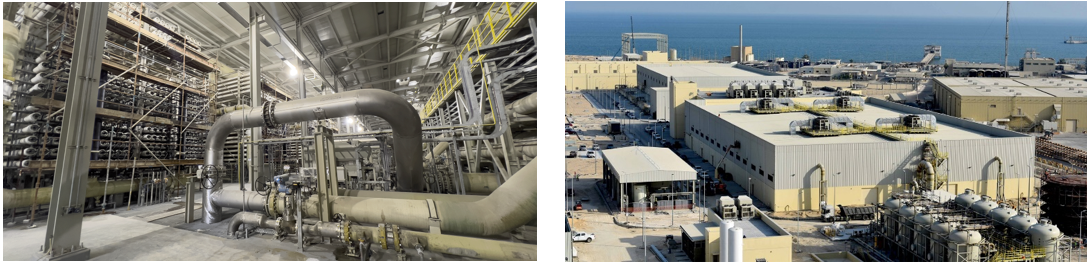
Source: Illustration from Acciona / www.acciona.com

Desalination is emerging as a vital solution: Although it currently supplies only about 1 % of global drinking water, advances in energy‑efficient desalination technologies are increasing its practicality and viability.

Case study: ACCIONA S.A. leads in reverse‑osmosis desalination - The company has built nearly 90 plants, serving over 100 million people in more than 30 countries. Its flagship project, the $500 million Al Khobar 2 plant in Saudi Arabia, delivers drinking water to roughly 3 million people per day and significantly lower energy use and CO₂ emissions compared with traditional thermal processes.

The Path Forward

Water is a defining issue of our time, shaped by growing demand, aging systems, and environmental pressures. Addressing it requires collaboration, innovation, and sustained investment to ensure long-term resilience.

For businesses and investors, this shift presents unique opportunities. Companies leading advances in water infrastructure, water technology, and sustainable water management, are in our view poised to play a pivotal role in shaping how the world accesses and preserves its most essential resource: Clean water. Finally, in the 21st century, in our view the most valuable asset won’t be what’s above ground – It’ll be what’s beneath it. Water isn’t just a resource; it’s the ultimate scarcity play. 

This article is brought to you by the Advisory Solutions Team.

References:
[1] OECD Water Governance Report, 2018

[2] Global Water Intelligence (GWI), March 2025.

[3] The American Society of Civil Engineers (ASCE) / Marketplace.org, May 2024.

[4] SCIRP.org, January 2020.

[5] The UN and World Bank, reported by Economyinsights, September 2025.

[6] The Global Water Crisis, J Stern & Co, 11.2023.

[7] Business Energy UK, September 2025.